Conversation • Food Beyond Convenience

What does it mean to truly live?

Explore the ideas of Aniish Shah, founder of Earth Harvests, through an intimate inquiry into food, living soil, human vocation, and the choices that shape how we spend our lives.

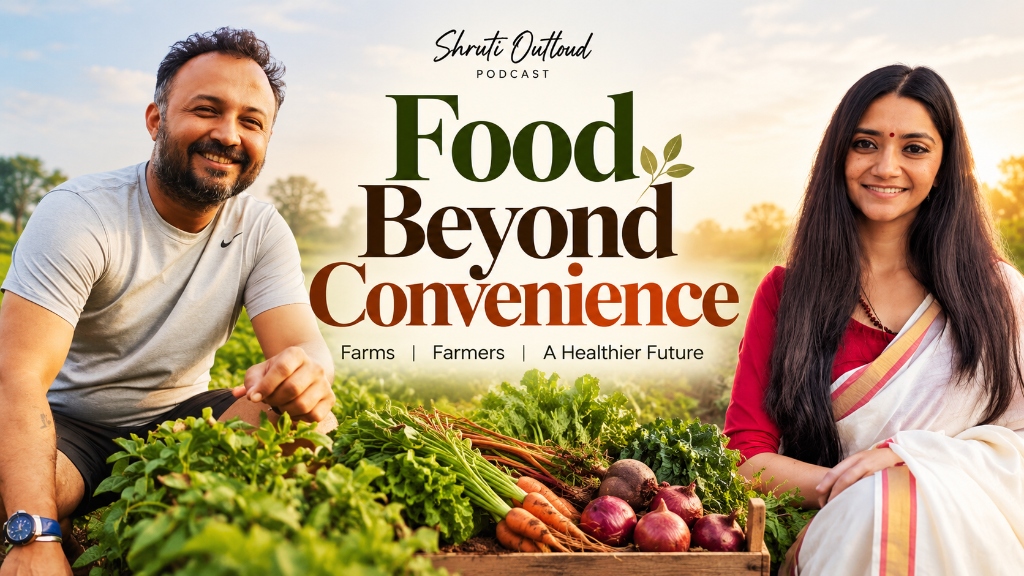
Food Beyond Convenience: Aniish Shah and Shruti Sharma on Shruti Outloud Podcast
Food Beyond Convenience Farms • Farmers • A Healthier Future
The Journey

From corporate media to living soil

A decadelong inquiry into the difference between biological maintenance and authentic human vitality.

For over a decade, Aniish Shah lived the demanding, fast-paced life of a media executive in urban India—traveling across states, negotiating commercial mandates, and navigating corporate ladders. But in 2013, an encounter with the lectures of independent dietary scientist Dr. Khadar Vali triggered an uncomfortable internal question: What is my daily life actually constructing?

“End of the day, nine out of ten people are just existing. We populate and we pollute. What are we creating that actually gives back?”

Shah did not stage a romantic, cinematic resignation. Instead, he spent two arduous years in “vocational double-shifting”—sneaking away from corporate offices on Thursday afternoons to apprentice under veteran organic growers in Doddaballapura and Belgaum, learning how living soil functions before taking his entrepreneurial leap.

The Initiative

Earth Harvests: Restoring the agrarian covenant

Dismantling predatory intermediaries through direct community-supported agriculture and chemical-free cultivation.

The turning point arrived when an eight-ton crop of pristine onions collapsed at a wholesale mandi, fetching a humiliating seventy-five paise per kilogram. That catastrophic market failure exposed the systemic absurdity of the conventional agricultural supply chain: farmers receiving pennies while urban households pay inflated prices for pesticide-laden produce.

In response, Shah founded Earth Harvests in Mumbai—a farm-to-table enterprise founded on Community Supported Agriculture (CSA). By eliminating exploitative brokers, utilizing closed-loop reusable crate logistics, and fostering direct bonds between conscious urban households and natural farmers, Earth Harvests proves that ecological farming can be economically sustainable.

100% Chemical-Free

Natural, non-synthetic inputs focusing on living soil microbiology and biodiversity.

Community Supported (CSA)

Pre-committed harvesting models that protect growers from wholesale mandi collapses.

Closed-Loop Logistics

Reusable sanitised crates replacing single-use plastic packaging across urban delivery routes.

Fair Farmer Margins

Direct farmgate compensation establishing a dignified livelihood for regenerative stewards.

The Full Conversation • Shruti Outloud Podcast

Food Beyond Convenience: Farms, Farmers, A Healthier Future

In this expansive recorded dialogue on Shruti Outloud, Shruti Sharma and Aniish Shah explore what happens when an urban professional steps off the treadmill of convenience to realign daily living with soil, purpose, and community.

Curated Moments

Reflections on Vocation & Vitality

Brief insights from Aniish Shah on finding purpose and stepping off corporate autopilot.

Curated Short 01

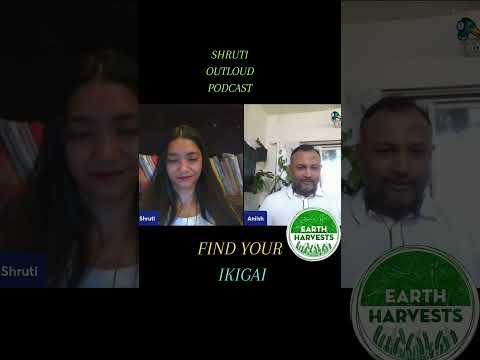
Unlocking Your Ikigai

Aniish reflects on the Japanese framework of purpose—how aligning passion, mission, and vocation liberates individuals from corporate burnout.

Watch on YouTube ↗
Curated Short 02

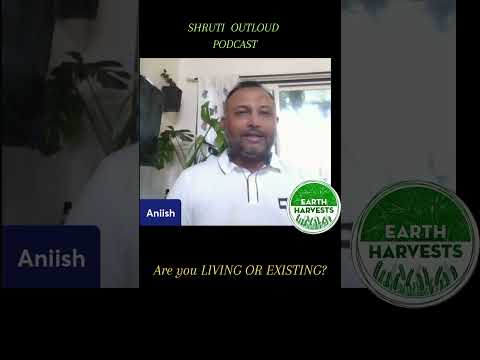
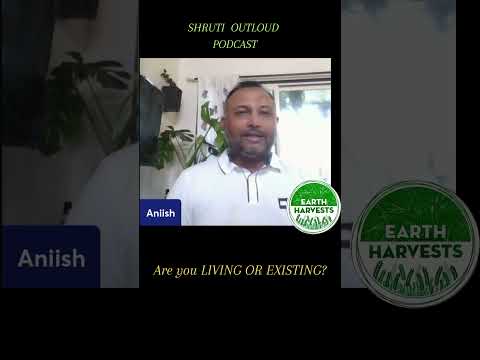
Living vs. Existing

Why modern urban conveniences frequently numb sensory awareness, leaving people merely surviving rather than participating in life.

Watch on YouTube ↗
The Rabbit Hole

Follow the Thread of Living Ideas

Treat each story as an entry point into a network of connected inquiries. Wander across seven concept-led pathways spanning human consciousness, agrarian economics, soil biology, and alternative food futures.

Pathway 01 · Consciousness & Modern Habits

The Architecture of Sleepwalking

Modern urban existence is engineered for frictionless convenience, but this very convenience numbs sensory awareness and replaces vitality with automated maintenance. What does it take to wake up?

The Architecture of Sleepwalking
Living vs. Existing

The Psychological Trap of the EMI: How Middle-Class Debt Silences Vocation

Explore Aniish Shah's critique of the middle-class EMI trap. Discover how home loans, car payments, and urban prestige keep 90% of corporate professionals from finding their true vocation.

Living vs. Existing

The Terrace Germination Epiphany: Why Sowing a Seed Breaks Urban Apathy

Explore how watching a seed sprout on a Bangalore apartment terrace transformed Aniish Shah from a corporate media executive into the founder of Earth Harvests.

Living vs. Existing

The Tyranny of the Two Inches: How Heavy Masalas Blinded the Indian Palate to Real Food

A provocative culinary critique exploring how over-spicing and heavy masalas mask degraded agricultural produce and disconnect eaters from real flavor.

Living vs. Existing

The “Chalta Hai” Syndrome: Why Convenience Erode Civic and Ecological Responsibility

An incisive sociological critique of India's 'Chalta Hai' culture, examining how everyday compromise enables toxic food, civic collapse, and ecological ruin.

Related Lines of Inquiry:
  • Luxury Cars vs. Native Trees: Raising Children Who Recognize Car Emblems But Not Fruit Blossoms →
  • No ‘Monday Blues’ in a Decade: The Reality of Daily Stress in Regenerative Agriculture →
Pathway 02 · Vocation & Career Transition

Stepping Off the Corporate Autopilot

Meaningful career reinvention is rarely an instantaneous heroic leap across a chasm; it is the slow, disciplined construction of a bridge while your feet are still planted on the old bank.

Stepping Off the Corporate Autopilot
Work, Purpose & Reinvention

Bunking on Thursdays: The Logistics of Vocational Double-Shifting Before You Quit

Learn the pragmatic logistics of leaving corporate life for natural agriculture. Discover how Aniish Shah balanced an executive media career with farm apprenticeships.

Work, Purpose & Reinvention

From Neev to Divine to Earth Harvests: The Trademark and Branding Trials of an Agri-Startup

Explore the real-world branding and trademark hurdles faced by Earth Harvests founder Aniish Shah. Learn how to navigate trademark classification and brand identity in India.

Work, Purpose & Reinvention

The Apprentice Years: What Doddaballapura and Belgaum Taught a Metropolitan Executive

Discover how Earth Harvests founder Aniish Shah mastered natural farming through rigorous field apprenticeships under Dr. Daran Rati [phonetic transcription in earth-harvest.txt; formal spelling to be confirmed with guest] in Doddaballapura and farms in Belgaum.

Work, Purpose & Reinvention

Balancing Two Hats: When the Farmer’s Conscience Clashes with the Retailer’s Balance Sheet

An unsparing founder essay on the agonizing philosophical and economic tension between agricultural ethics and urban retail expectations.

Related Lines of Inquiry:
  • Walking Alone: The Solitude and Fellowship of Rebuilding a Life Around Values →
  • The Dying Balcony Bee: What Declining Urban Pollinators Mean for Indian Rooftop Gardens →
  • Ten Unanswered Questions: What the Shruti Outloud Conversation Leaves Open for the Future →
Pathway 03 · Soil Biology & Ecological Systems

The Living Microbiome Beneath Our Feet

Industrial agriculture treats soil as inert dirt—a physical substrate designed solely to hold synthetic chemical inputs. Real agriculture begins with the understanding that soil is a living biological organism.

The Living Microbiome Beneath Our Feet
The Intelligence of Soil

The Brain in the Soil: How Microbial Networks Govern Plant Intelligence

Discover how mycorrhizal fungi and rhizosphere bacteria form a biological neural network that governs plant nutrition, immunity, and communication.

The Intelligence of Soil

Fruit Days, Apogee, and Moon Opposite Saturn: What Biodynamic Calendars Actually Measure

A rigorous scientific and historical investigation into biodynamic planting calendars, Maria Thun's lunar rhythms, and gravitational plant biology.

The Intelligence of Soil

Cow-Dung Ash and Copper Pyramids: Examining the Chemistry, Culture, and Science of Homa Farming

An unvarnished scientific and cultural investigation into Agnihotra, inverted copper pyramid combustion, and the mineral chemistry of cow dung ash.

The Intelligence of Soil

India’s ₹1,584 Crore Natural Farming Mission: Can Policy Mandates Match On-the-Ground Agronomy?

An in-depth policy critique of India's National Mission on Natural Farming (NMNF), analyzing transition yield gaps, extension deficits, and farmer adoption barriers.

Related Lines of Inquiry:
  • Vrikshayurveda in the 21st Century: What Modern Agronomy Can Learn from Ancient Indian Texts →
  • The Chemical Nitrogen Trap: How 50 Years of Synthetic Urea Depleted Indian Soil Carbon →
  • Astronomy or Astrology? What Modern Soil Science Says About Biodynamic Calendars →
Pathway 04 · Supply Chains & Market Realities

The Brutal Arithmetic of the Mandi

When an eight-ton crop of pristine onions fetches pennies at the wholesale market while consumers pay inflated prices in metropolitan supermarkets, the myth of the market collapses.

The Brutal Arithmetic of the Mandi
The Food We Don’t See

The 75-Paise Mandi Shock: Deconstructing the Arithmetic of an 8,000 kg Vegetable Loss

Deconstruct the brutal economics of an 8-ton onion harvest sold for ₹0.75/kg. Discover why wholesale mandis fail farmers and how Earth Harvests built a CSA alternative.

The Food We Don’t See

The Tomato Bullwhip Effect: Herd Mentality, Volatility, and Why Farmers Overplant

Understand why Indian tomato prices swing from ₹2 to ₹250/kg. Explore Aniish Shah's critique of farmer herd mentality and the need for taluka-level crop planning.

The Food We Don’t See

The Myth of the Cold-Storage Cure: Why India’s Infrastructure Deficit Leaves Vegetables to Rot

An in-depth analysis of why expanding cold storage infrastructure fails to solve post-harvest perishables loss without farmgate pre-cooling and market linkage.

The Food We Don’t See

Beyond the APMC Middleman: Examining the Real Costs of Commission Agents and Mandi Cartels

An unvarnished economic investigation into the dual role of the APMC commission agent as predatory lender and informal rural financier in India.

Related Lines of Inquiry:
  • The Taluka Demand Map: A Decentralized Policy Blueprint to Prevent Farmgate Gluts →
  • Imported Berries vs. Local Gourd: Navigating the Carbon Conscience of the Affluent Urbanite →
  • The 2024–2026 Tomato Shock: Why Neither Mandi Reform Nor Export Bans Can Fix Vegetable Price Volatility →
Pathway 05 · Cellular Vitality & Consumer Choices

Upstream Soil to Downstream Immunity

We spend fortunes treating chronic lifestyle diseases downstream in hospitals while ignoring chemical inputs upstream on the farm. Preventative wellness begins with knowing your grower.

Upstream Soil to Downstream Immunity
Rethinking Health & Nutrition

Ask Your Sabziwala: The Uncomfortable Truth About Sewage Irrigation Along Railway Tracks

An investigative exposé into peri-urban railway track agriculture, untreated wastewater irrigation, and heavy metal toxicity in Indian metro produce.

Rethinking Health & Nutrition

The “Chane Ka Jhad” Incident: How Metropolitan Education Created Generational Nature Amnesia

An incisive cultural critique of elite urban schooling and generational plant blindness, sparked by a visitor asking to climb a chickpea tree.

Rethinking Health & Nutrition

The Energy of the Cook: The Overlooked Psychological Impact of Outsourced Kitchens

An exploration of how domestic kitchen outsourcing, commercial ghost kitchens, and the emotional state of the cook impact family nutrition and mental wellbeing.

Rethinking Health & Nutrition

The ICMR 2024 Dietary Shock: Why 56% of India’s Disease Burden Points to the Plate

An in-depth analysis of the landmark ICMR-NIN 2024 Dietary Guidelines for Indians, exploring the nutritional collapse driving modern chronic diseases.

Related Lines of Inquiry:
  • Winter Self-Sufficiency on a Metro Terrace: How Aniish Shah Grows 100% of His Vegetables in Mumbai →
  • The 5 Questions Every Consumer Must Ask Their Produce Supplier →
  • The Diabetic Capital of the World: What Aniish Shah Learned from Dr. Khadar Vali →
Pathway 06 · Traditional Agro-Astronomy & Biodynamics

Attunement to Cosmic Rhythms

Centuries before synthetic fertilizers, indigenous agricultural treatises aligned planting with lunar cycles (Nakshatras) and biological rhythms. What can modern agronomy learn from historical patience?

Attunement to Cosmic Rhythms
Ancient Wisdom, Living Systems

The Beginner’s Green Window: Why You Should Never Start with Tomatoes (And How Methi and Dhania Build Success)

A practical beginner's masterclass on urban balcony gardening: why tomatoes guarantee failure and how methi and dhania build lasting success.

Ancient Wisdom, Living Systems

“Populate and Pollute”: Escaping the Three-Part Life Cycle of Modern Consumerism

A philosophical critique of modern middle-class existence as a continuous cycle of consumption and waste, and how to reclaim meaningful ecological life.

Ancient Wisdom, Living Systems

The High-Rise Pollination Deficit: What Withered Balcony Flowers Reveal About Urban Sterility

An ecological reflection on why balcony vegetable flowers wither without setting fruit, and what high-rise insect sterility reveals about urban biodiversity collapse.

Ancient Wisdom, Living Systems

Astronomy or Astrology? What Modern Soil Science Says About Biodynamic Calendars

A rigorous scientific review comparing biodynamic agriculture preparations (500/501) and lunar calendars against mainstream soil microbiology and peer-reviewed trials.

Related Lines of Inquiry:
  • Why Community Supported Agriculture Collapsed Post-COVID: The Fatal Friction of Pre-Planning →
  • The Yield Penalty Reality: Can Natural Farming Survive Without Synthetic Nitrogen? →
  • Hand-Pollination Masterclass: How to Help Your Balcony Vegetables Set Fruit Without Bees →
Pathway 07 · Community-Supported Agriculture & Ethics

The Anti-Unicorn Agrarian Model

Rejecting hyper-growth venture capital mandates in favor of biological caps, reusable sanitised crate logistics, and genuine community accountability between grower and eater.

The Anti-Unicorn Agrarian Model
Building a Different Food Future

Community Supported Agriculture (CSA) in India: Can Pre-Paid Farming Scale in Metros?

Explore the business model, unit economics, and consumer retention challenges of Community Supported Agriculture (CSA) in India through the lens of Earth Harvests.

Building a Different Food Future

Building an Ecosystem, Not a Unicorn: How Earth Harvests Incubates Artisanal Food Makers

A business case study of Earth Harvests' incubator model: rejecting venture-backed hyper-growth to build a resilient, multi-producer artisanal food ecosystem.

Building a Different Food Future

The Closed-Loop Crate System: The Economics of Reusable Logistics in South Mumbai Towers

A practical operations case study of Earth Harvests' reusable crate system across high-rise residential towers, detailing the mechanics of reverse logistics.

Building a Different Food Future

Why 700 Loyal Customers Beat 50,000 App Downloads: The Power of Hyper-Local Density

A rigorous D2C unit economics case study comparing hyper-local delivery density against venture-backed app acquisition in Indian fresh produce.

Related Lines of Inquiry:
  • The 150-Call Awakening: Why Urban Environmentalism Collapses When Comfort Returns →
  • The Monsoon Packaging Paradox: Why “Zero Plastic” Claims in Tropical Produce Delivery Are Dishonest →
  • FSSAI’s 2024 Pesticide Crackdown: What International Export Rejections Mean for Domestic Plates →
  • Greenwashing the Grocery Bag: How CPCB’s 2024 Plastic Rules Are Exposing D2C Delivery Claims →
  • Is Chemical-Free Food a Bourgeois Luxury? Examining the Affordability Barrier of Ethical Farming →
Continuing the Inquiry

Where will curiosity take you next?

Whether exploring the soil microbiology of natural agriculture, revisiting the uncut Q&A interview, or discovering sacred landscapes across the archive, Shruti Outloud invites you to listen deeply.